01.
About Us
Yolene Handabaka
Built Heritage Consultant
in Montréal and Québec
Espace patrimoine bâti is a consulting firm based in Montréal and operating throughout Québec,a place for dialogue where connections are forged between communities and heritage, with the aim of deepening knowledge of heritage, understanding its complexity, and promoting it in a sustainable manner.
With a Bachelor’s degree in Architecture, a Minor in Urban Planning, and a Master’s degree in Built Heritage Conservation from Université de Montréal, Yolene Handabaka is passionate about built and urban heritage. Her perspective on heritage stems from her background in architecture, which gives her a unique, focused vision for every building she works on. She is convinced that heritage is a place that bears witness to our history, our origins, and our appropriation of space—a space that is constantly renewed through the people who choose it and interact within it over time. A space becomes heritage when the connection between people and past realities is born there and endures over the years. Built heritage is thus a dynamic reality, as it evolves and enriches itself over time as a living presence waiting to be valued.
Currently, Yolene Handabaka is a Ph.D. candidate in architecture at Université de Montréal, where she is pursuing her doctoral research on the bottom-up creation of the social value of built heritage. Concurrently, she works as a consultant in built heritage as well as for the Laboratory for the Study of Potential Architecture (LEAP) and the Canada Research Chair in Architecture, Competition, and Quality (CRC-ACQUA) at Université de Montréal.
02.
SERVICES
Our professional heritage services are designed for property owners, real estate developers, institutions, and municipalities in Québec wishing to deepen their knowledge of built heritage and looking to undertake interventions on old or historic buildings.

KNOWLEDGE

INTERVENTION
03.
expertise

Since completing her master’s degree, Yolene Handabaka has gained diverse experience in the fields of built heritage conservation, architecture, and historical research. In fact, she worked for the Canada Research Chair in Built Heritage and the Université de Montréal, and subsequently collaborated with heritage-specialized firms such as NCS Architecture, Cité: patrimoine et recherche, and l’Usine à histoire(s), as well as on contracts for the Ministry of Culture and Communications and Hydro-Québec.
As a built heritage consultant in Montréal, she conducts heritage studies, heritage inventories, and expert reports throughout Québec , and provides consulting services in heritage preservation, enhancement, repurposing and conservation.

04.
FIELD OF EXPERTISE
03.
Architectural Heritage
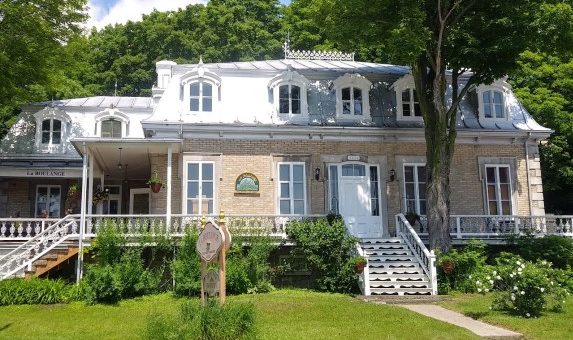
The architectural heritage of Quebec is based on a spectrum of buildings of different styles and meanings that hold a unique value derived from their singularity.
Whether it is a residential, commercial, or industrial building, a school, a church, or any other institutional building, we conduct Heritage Studies, Historical Research and Heritage Inventories aiming at establishing their Heritage value.
Urban Heritage
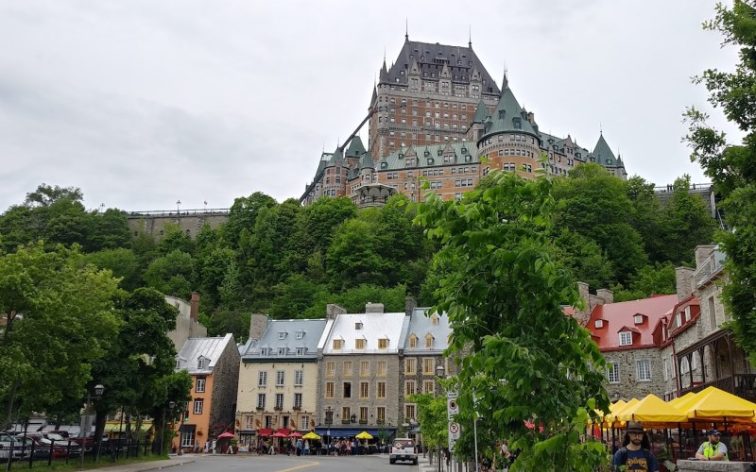
The urban heritage of Quebec is composed not only of Heritage buildings, but especially of a combined group composed by streets, neighborhoods, towns, or cities where it is located. It is the urban structure corresponding to different stages of development which provides each town or city in Quebec with its special characteristics. The Study of characterization is the perfect tool not only to deepen the knowledge of a place or a territory, but to enhance the unique elements of its urban landscape, its history and its Heritage identity.
CONTACT
05.